Building a Capsule Wardrobe Without Overspending
Build a versatile capsule wardrobe on a budget with smart planning, strategic shopping, and timeless pieces that mix, match, and last.
Define Your Style and Budget: Start your capsule wardrobe by clarifying what you actually wear, not what you think you should wear. Audit your closet and note your most-used silhouettes, fabrics, and colors. Build a focused shopping list around those patterns and cut anything that does not serve your lifestyle. Set a clear spending plan using item caps or a monthly envelope, and decide in advance what is worth splurging on versus where to save. Track cost-per-wear to evaluate value over time; a well-made blazer worn often can cost less per wear than a cheap trend item that sits idle. Create a short list of anchor pieces, such as a tailored jacket, versatile jeans, a crisp shirt, and comfortable shoes, then add a few accent items for personality. Introduce a cooling-off period before checkout to curb impulse buys. When your list drives your choices, every purchase works harder, and overspending becomes easier to avoid.
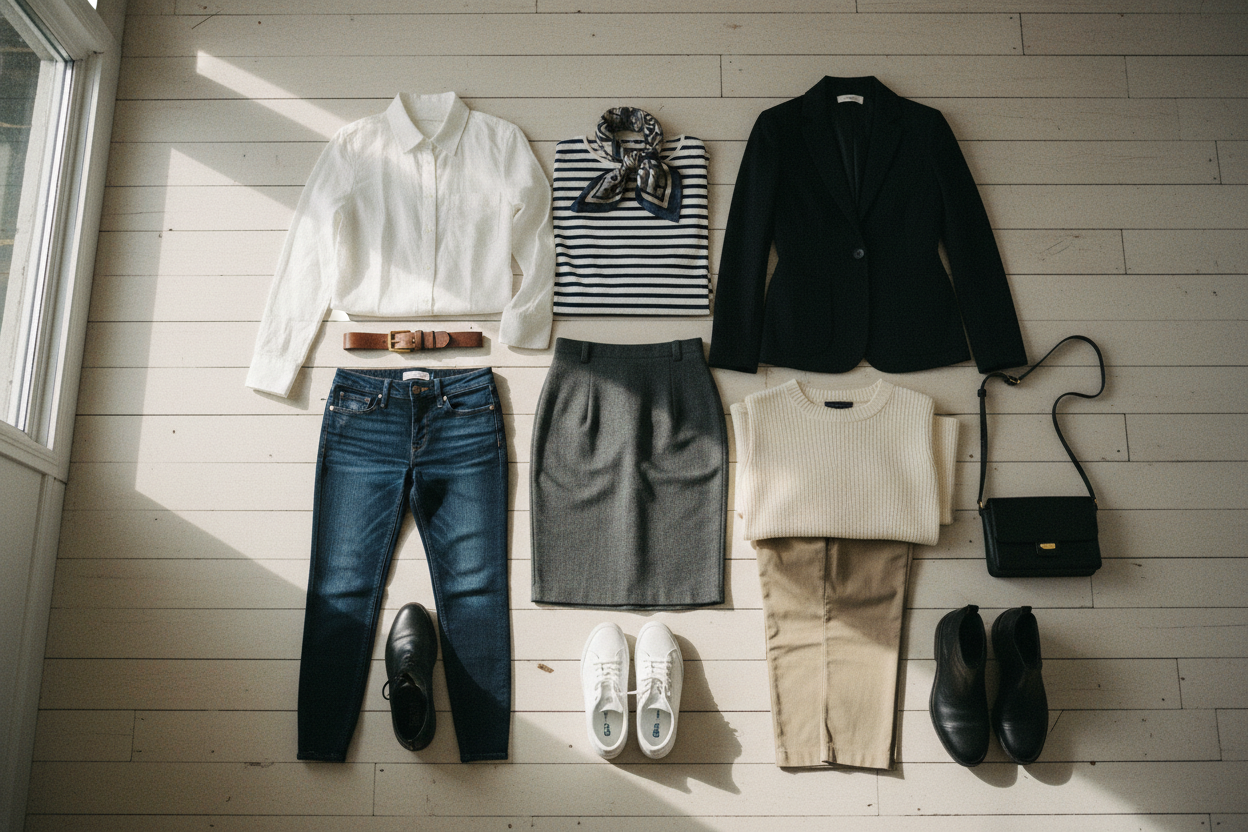
Build a Cohesive Color Palette: A tight palette is the secret to maximum outfits with minimal pieces. Choose a neutral base—think black, navy, camel, gray, or chocolate—and add two or three accent colors that flatter your skin tone. Focus on undertones: warm neutrals pair well with earthy accents, while cool neutrals harmonize with jewel tones. Limit pattern variety and scale so prints can layer without clashing. Consider texture as a color alternative; mixing denim, leather, silk, and knit adds depth without expanding the palette. Match hardware tones where possible so belts, bags, and jewelry feel coordinated. When nearly everything complements everything else, you reduce the urge to buy fillers, increase outfit flexibility, and simplify packing. Keep a photo album of favorite combinations to identify gaps. A cohesive palette reduces decision fatigue, saves money by preventing duplicate buys, and makes every new piece immediately useful.
Prioritize Fit and Fabric: Quality over quantity becomes non-negotiable when you want a small closet to work hard. Start with fit: garments should skim the body without pulling, bunching, or collapsing. Shoulder seams on jackets should sit at the edge of the shoulder; waistbands should stay in place without digging. If an item is close but not perfect, budget for tailoring—minor adjustments often transform a piece. Evaluate fabric content and construction: sturdy cottons, breathable linens, fine wools, and smooth modal or lyocell blends wear well and feel elevated. Check seams, button reinforcement, and zippers for durability. Hold fabric up to the light to test opacity and drape. Pick shoes with supportive soles and replaceable heel caps to extend life. Consider care needs; pieces that can be washed at home reduce ongoing costs. A few thoughtfully selected, well-constructed garments outperform a crowded closet, keeping your total spend lower over time.
Plan Smart Sourcing and Shopping: Make a precise wish list and shop with purpose. Start at your own closet, then explore consignment, thrift, and reputable resale platforms for higher-quality pieces at approachable prices. Compare across sources and keep notes on typical price ranges so you can recognize a genuine deal. Use a short waiting period for any purchase above your set threshold, and revisit your list before buying. Practice the one-in, one-out rule to keep volume in check. When in stores, test mobility—sit, walk, and reach—to confirm function and comfort. Inspect items in natural light to catch color shifts or flaws. Consider off-peak shopping times for clearer decision-making and less pressure. Be mindful of return windows and condition requirements to protect your budget. The goal is not to chase every sale but to secure the right item at the right price. Strategic sourcing yields better pieces, fewer regrets, and meaningful savings.
Create Versatile Outfit Formulas: Build around simple, repeatable formulas so a few items generate many looks. For example: structured jacket + clean tee + straight-leg bottom + low-profile shoe; or fluid blouse + midi skirt + lightweight knit + ankle boot. Aim for pieces that dress up or down with small tweaks—swap sneakers for loafers, add a belt, or layer jewelry. Embrace proportions: balance volume on top with slimmer bottoms, or pair a relaxed trouser with a fitted knit. Keep hemlines compatible so tops tuck smoothly and layers stack without bulk. Choose multipurpose accessories—neutral belts, a refined watch, a scarf that works as a wrap—to stretch outfits further. Try a column of color to elongate the silhouette, then add a contrasting layer for depth. Document go-to combinations, and you will shop to complete looks rather than chase standalone items, which naturally reins in spending.
Care, Maintenance, and Rotation: Protect your investment with consistent garment care. Read care tags and wash similar fabrics together using gentle cycles and cool water when possible. Hang knits flat to dry to prevent stretching, and use steam to refresh between wears. Keep a small kit with a fabric shaver, stain remover, spare buttons, and a travel-sized sewing kit for quick fixes. Store leather goods with inserts to maintain shape; rotate shoes and use cedar trees to manage moisture and odor. Mend early—tighten loose buttons, reinforce seams, and resole shoes before damage advances. Seasonal storage matters: clean items before storing, use breathable bags, and keep silica packets to manage humidity. Regular rotation distributes wear and reveals true workhorses in your wardrobe. Well-maintained pieces last longer, reducing replacement costs and supporting a leaner, more economical closet.
Refresh Intentionally Without Overspending: When your wardrobe is working, change becomes about refinement, not accumulation. Schedule periodic reviews to evaluate fit, condition, and relevance to your routine. Retire rarely worn items by selling, swapping, or donating to reclaim value and space. Refresh with low-cost upgrades—swap buttons, adjust hems, or dye a faded piece to extend life. Use accessories to tap into micro-trends without large purchases: a belt shape, a scarf print, or a sleek bag instantly updates familiar outfits. Practice the one-in, one-out rule to maintain balance, and set a small discretionary fund for experimentation so your core budget stays protected. Keep a concise mood board to align new buys with your vision. The goal is continuous alignment, not constant accumulation. Thoughtful tweaks ensure your capsule wardrobe feels fresh, functional, and stylish while keeping spending firmly under control.